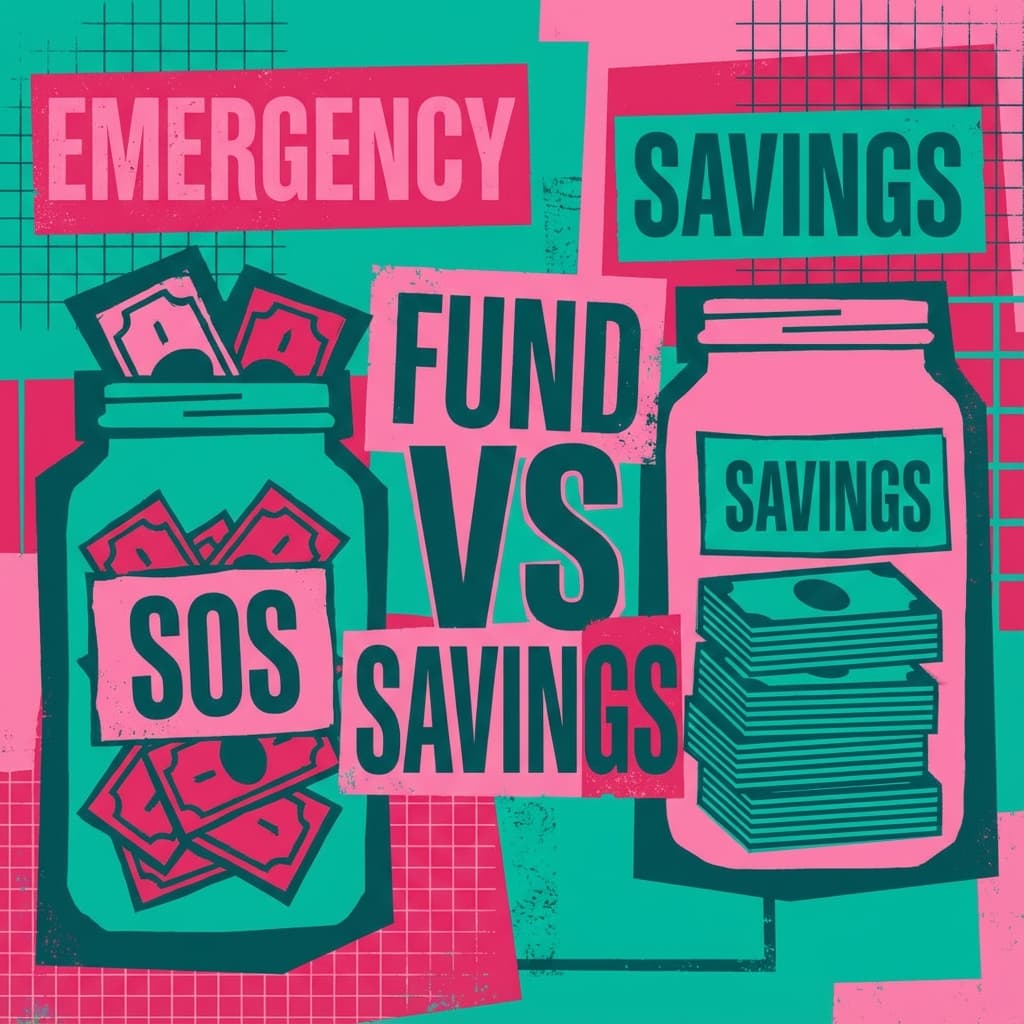
"Isn't an emergency fund just a savings account?" Yes and no. While both involve putting money aside, they serve different purposes and should be managed differently. Here's how to think about each.
Emergency Fund: Your Financial Insurance
An emergency fund is specifically for unexpected, urgent expenses or income loss.
Characteristics
- Purpose: True emergencies only
- Goal: 3-6 months of essential expenses
- Access: Must be immediately accessible
- Use: Rarely touched (ideally never)
- Growth: Not the priority—safety is
What It's For
- Job loss
- Medical emergencies
- Essential home repairs
- Car repairs (if needed for work)
- Unexpected essential travel
ℹ️ The Test
Ask yourself: "Would I be in financial trouble without this expense?" If yes, it might be an emergency. If no, it's probably not.
Savings: Your Goal Funds
Regular savings are for planned future expenses and goals.
Characteristics
- Purpose: Specific goals
- Goal: Varies by what you're saving for
- Access: Can be locked if goal is far away
- Use: Spent when goal is reached
- Growth: Optimize for best returns
What It's For
- Holiday fund
- House deposit
- New car
- Wedding
- Home improvements
- Retirement (invested)
Key Differences
AspectEmergency FundSavingsPurposeUnexpected eventsPlanned goalsAccessInstantCan be lockedUseRarelyWhen goal reachedLocationSafe, liquidDepends on timeline
Calculate Your Emergency Fund
Use our calculator to find your ideal emergency fund target.
Why You Need Both
If you only have savings for goals:
- Emergency hits → raid your house deposit fund
- Your goals get pushed back
- You feel like you're always starting over
With separate emergency fund:
- Emergency hits → use emergency fund
- Your goals stay protected
- You rebuild emergency fund, goals continue
Which to Build First?
- Starter emergency fund (£1,000): First priority always
- High-interest debt: Pay this off before more savings
- Full emergency fund (3-6 months): Your financial foundation
- Goal savings: Now build your future
About iBudget
iBudget helps couples and families take control of their finances with simple, collaborative budgeting tools. Track spending, set goals, and build wealth together.
Start Your Budget